
MicroRate analyzed in detail the portfolio of 5 supervised MFIs that represent 10% of the total MSE portfolio in Peru (approximately USD 14 billion).
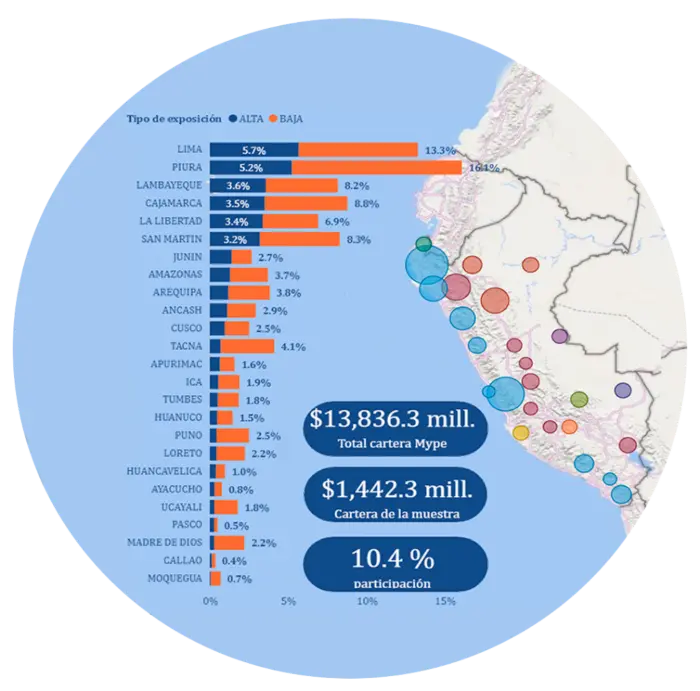
The map shows the geographic exposure to natural phenomena arising from climate change. The bar chart identifies the portfolio disbursed by economic sector with the greatest vulnerability to climate change and the region potentially most exposed.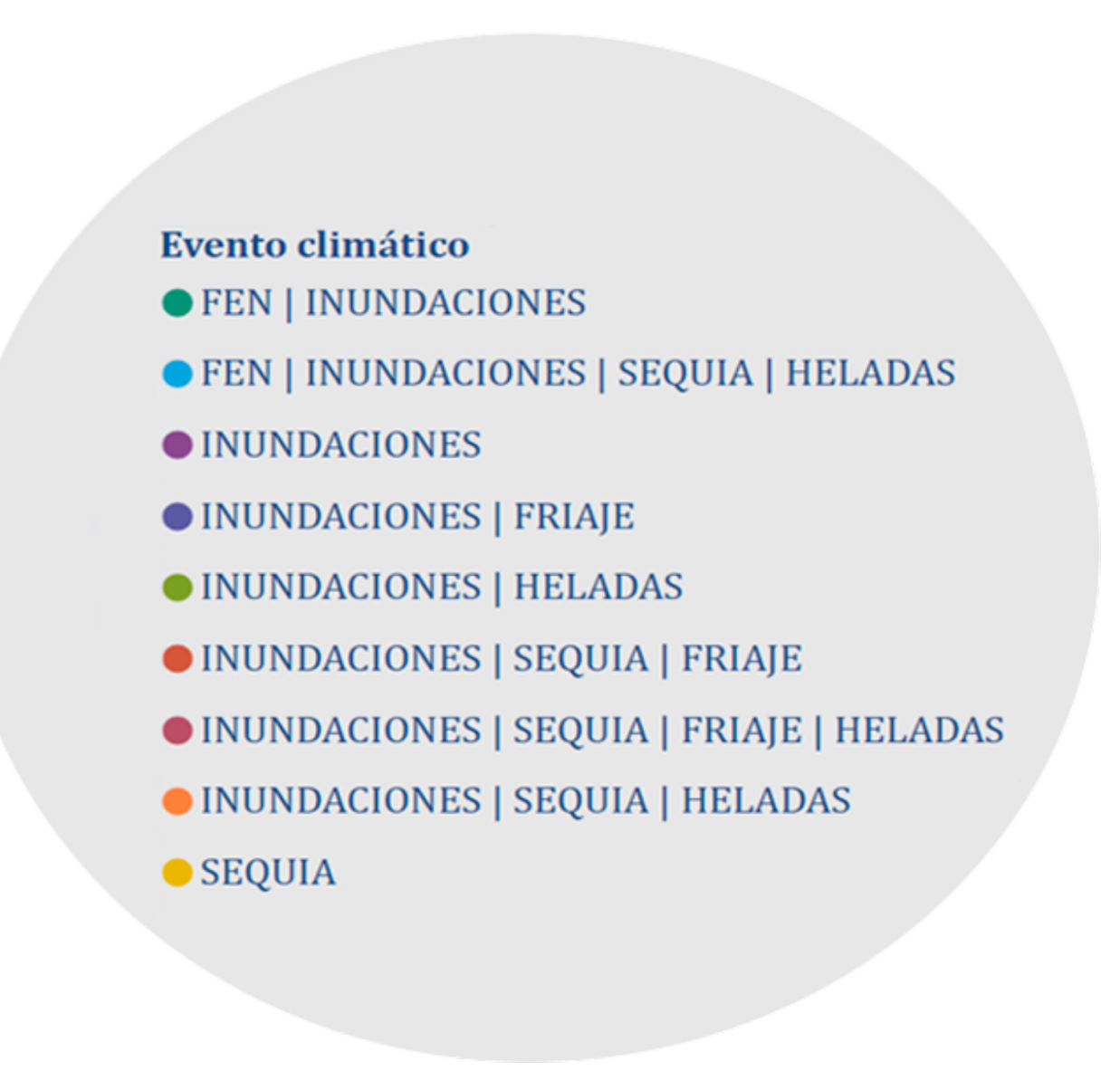
Coincidentally, the departments that would face a high incidence in their loan portfolios are the most populated in Peru. Among these: Lima, La Libertad, Piura, Cajamarca.
The crucial challenge for financial institutions with a potentially more sensitive portfolio is to identify how to generate and promote greater adaptation, resilience, control, and prevention management over the economic activities of their clients comparatively more exposed to environmental change, as an inherent part of their risk management. Coincidentally, the departments that would face a high incidence in their loan portfolios are the most populated in Peru. Among these: Lima, La Libertad, Piura, Cajamarca.
Among the best practices identified internationally, there is continuous monitoring and awareness-raising (through training) of clients on environmental change, both borrowers and savers. Likewise, there is already a culture of climate risk management within the organization, as part of the institution's Corporate Governance and strategy. 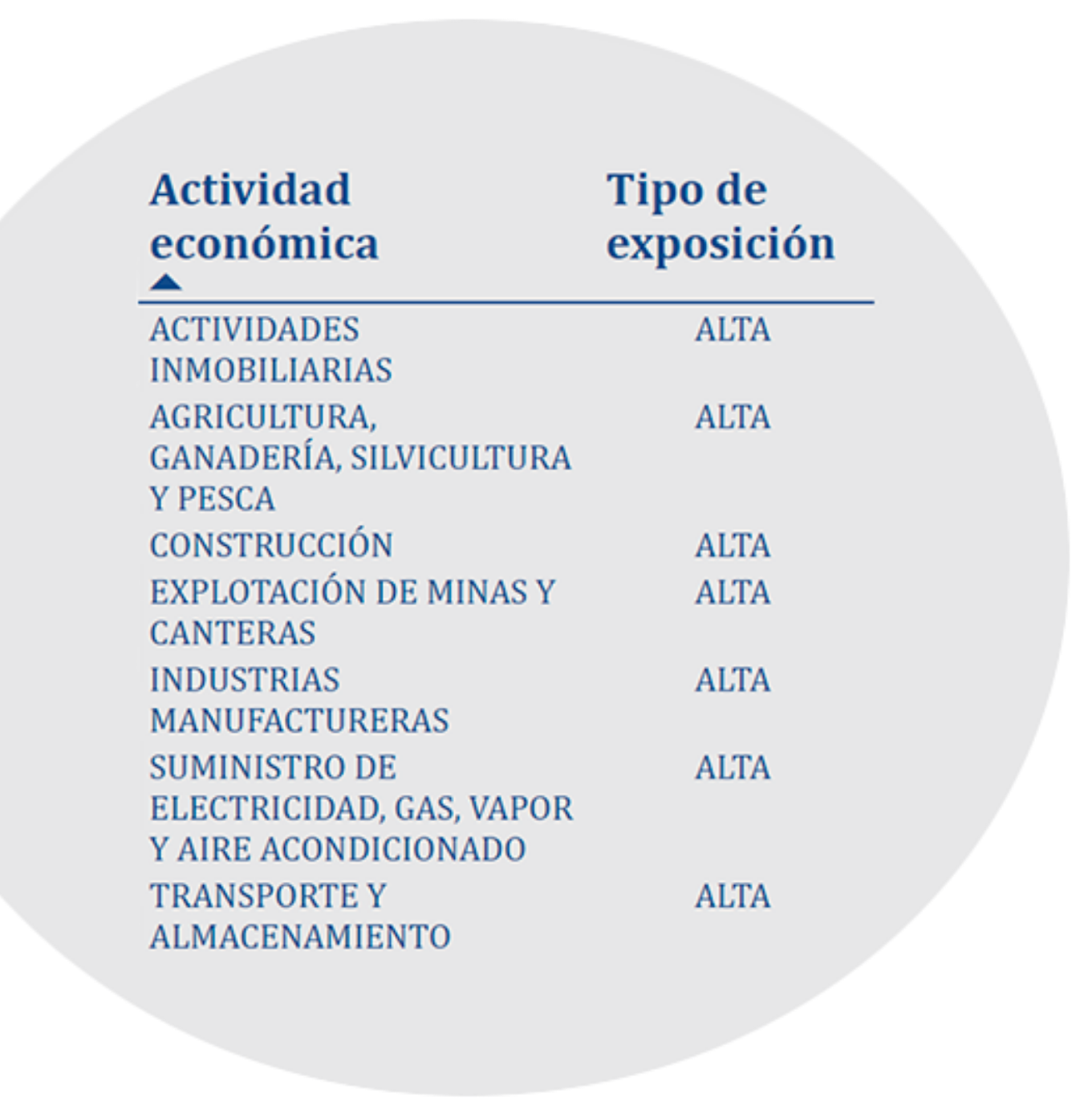
The risk-prevention culture is also present to review historical events and to identify new threats. In this regard, the review of credit origination processes has become more dynamic and will maintain this trend as long as a degree of uncertainty coexists about the timing (when they will occur), frequency, and magnitude of impact of natural phenomena.
In MicroRate's view, this new climate environment driven by temperature change has at the same time generated new opportunities to develop credit and non-credit products that prepare microfinance institutions and their clients for new contexts.
For example, loans are created to adapt businesses in their production processes, including optimization of water resources and the use of renewable energy; various insurance products; among others, designed to promote the adaptability and continuity of clients' businesses.
The role of financial institutions focused on micro and small enterprises has, in MicroRate's reading, a multiplier impact on climate-risk awareness, as they concentrate the broadest client base of the financial system and the one that sits at the front line of the value chain.